
How does a reverse mortgage work?
A HECM is the FHA-insured reverse mortgage for homeowners 62 and older: it turns part of your home's value into cash with no monthly loan payment.
Estimate my reverse mortgageThree questions. No name, email or ZIP code.
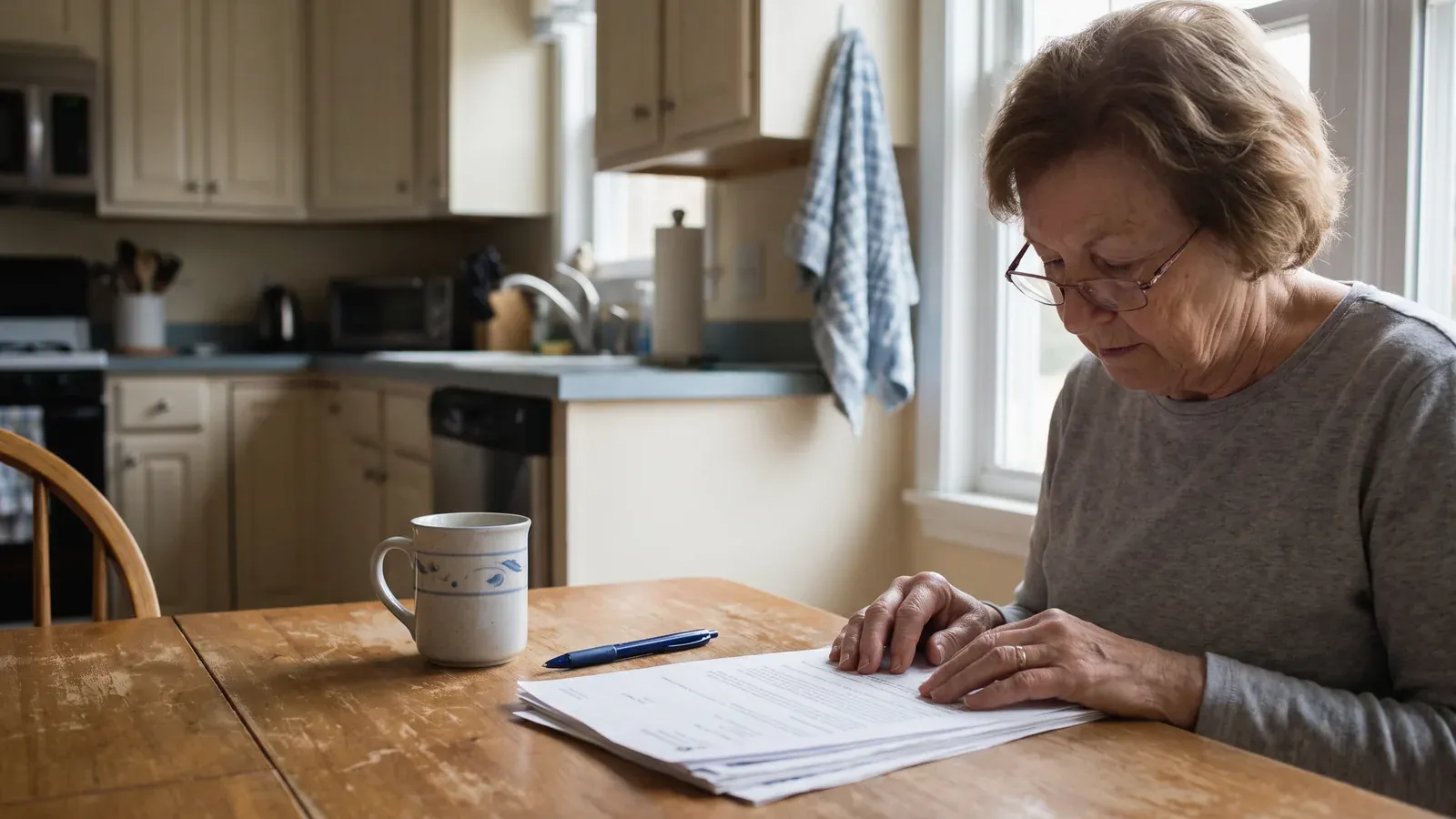
To understand what a reverse mortgage does, imagine a loan that sends you cash, with no monthly bill, if you're a homeowner 62 or older. The bank pays you, rather than you sending money to the bank every month. You won’t repay the loan until you sell the house, move out or die.
How a reverse mortgage works, step by step
- Check that you qualify. The youngest owner is 62 or older, the house is your main home, and any mortgage left on it can be cleared by the new loan.
- Talk with a HUD-approved counselor. HUD requires this session before you apply. It is often by phone, and you get a certificate the lender needs.
- Apply and have the home appraised. The lender looks at your income and bills to make sure you can keep paying taxes and insurance. An FHA appraiser sets the value.
- Close the loan. The costs and any old mortgage are paid out of the loan. Unless you are using it to buy a home, you then have three business days to cancel.
- Receive the money. Take it as a lump sum, monthly payments, a line of credit or a mix, within the first-year limit.
- Live there and look after the house. There is no monthly loan payment, but property taxes, homeowners insurance and repairs stay yours.
- Repay when the last borrower leaves. The house is usually sold, and nobody owes more than it is worth.
A reverse mortgage explained: what is a HECM?
With this loan, you can stay in your home and convert a portion of your equity into cash. Simply put, home equity is the amount your home would sell for, less any debt you still carry on it. You can still have a mortgage on the house. The Federal Trade Commission says you need to own it outright or owe little enough that the balance can be paid off at closing, usually with money from the reverse mortgage itself. Whether yours is small enough depends on your age, your home's value and the rate.
A Home Equity Conversion Mortgage, or HECM, is the most common choice and is insured by the Federal Housing Administration. The government backed 22,318 of these loans during the period from October 2025 through August 2026. The Washington Department of Financial Institutions requires all owners to be 62 or older, with at least 1 living in the home. Before you apply, you speak with HUD-approved reverse mortgage counselors to have the reverse mortgage explained to you clearly. You’ll typically pay around $125 for counseling, and the loan can cover that fee.
Ways to take the money
The total pool you can borrow from, before costs, is called the principal limit. During the first 12 months, you can access no more than 60% of that pool. A larger amount is allowed in year 1 just for paying off a current mortgage, covering closing costs and 10% more.
A fixed interest rate comes with a single lump sum at closing, and it is held to that same first-year limit: whatever you cannot take on day one is not paid later. Choose an adjustable rate and you can get a fixed monthly payment, a credit line for future bills or a split between them.
How much does a reverse mortgage pay?
Three things set how much you can borrow: the youngest borrower’s age, your home’s value and the interest rate. The older a borrower is, the larger the percentage of their home’s value they can access. The home value HUD uses to determine your loan is capped by the HECM lending limit, which rises to $1,249,125 for 2026 from $1,209,750 in 2025. Try out your own figures using our reverse mortgage calculator.
Two rates matter. The expected rate, today 7.125% (the 5.00% 10-year Treasury plus a typical 2.125% lender margin), sets how much you can borrow. The note rate is what your balance grows by; the median on new HECMs was 6.0% in August 2026. Our worked examples use the expected rate.
| Youngest owner | $250,000 home | $400,000 home | $600,000 home | $1,000,000 home |
|---|---|---|---|---|
| Age 62 | $64,250 | $105,800 | $163,200 | $278,000 |
| Age 70 | $78,750 | $129,000 | $198,000 | $336,000 |
| Age 75 | $86,000 | $140,600 | $215,400 | $365,000 |
| Age 80 | $97,750 | $159,400 | $243,600 | $412,000 |
| Age 85 | $114,250 | $185,800 | $283,200 | $478,000 |
Worked example: age 70, a $400,000 home, nothing owed
| Principal limit (36.5% of the home's value) | $146,000 |
| Upfront FHA insurance (2%) | −$8,000 |
| Origination fee | −$6,000 |
| Appraisal, title and other closing costs, about | −$3,000 |
| Left for you | $129,000 |
Typically, upfront reverse mortgage closing costs come out of that pool instead of being paid from your own pocket. You pay the government a 2% upfront mortgage insurance charge. Roughly $3,000 is the average for third-party expenses such as the appraisal, title search, and recording, notes the Consumer Financial Protection Bureau. The lender’s fee, per 24 CFR 206.31, is 2% of your home’s value up to $200,000, then 1% on the rest. The fee is at least $2,500 and never goes above $6,000. After the loan begins, the balance increases by the interest rate plus an annual 0.5% for insurance.
What the same loan owes over time
If the 70-year-old above took the most allowed in the first year ($87,600, costs included) and nothing after, at 6% plus 0.5% insurance:
| After | Owed | Equity left if the home stays at $400,000 |
|---|---|---|
| 5 years | $121,135 | $278,865 |
| 10 years | $167,507 | $232,493 |
| 15 years | $231,632 | $168,368 |
| 20 years | $320,305 | $79,695 |
Run it for your own age and home: reverse mortgage amortization calculator.
Bills you continue to pay on your own
You still own the house even without a monthly mortgage bill, so its regular costs stay with you:
- property taxes
- homeowners insurance, plus flood insurance where it is required
- repairs that keep the house in good shape
- any homeowner association dues
Fall behind on these and the lender can call the full loan due. The upfront fees and a growing balance, which shrinks the equity your family would receive, sit among the other reverse mortgage pros and cons.
Loan repayment and the 95% rule
The loan must be repaid after the final borrower sells the home, passes away or leaves for more than 12 months. DC Department of Insurance, Securities and Banking rules say you have to repay if you leave the home for longer than 12 months. Selling the house is how most families repay what's owed, and they get to keep whatever cash remains.
Since this is a non-recourse loan, you and your heirs will never be asked to pay more than the home's value. Should your loan balance surpass the home's worth, the 95% rule shields your family throughout the reverse mortgage after death settlement. Heirs who want the house repay the balance when it is lower than the home's value. When the balance is higher, they pay 95% of the appraised value and federal insurance covers the rest.
Warning signs of a reverse mortgage scam
- Someone you did not contact offers a free house, a repair or an investment paid for by a reverse mortgage.
- You are told to sign quickly, or to skip or shorten the counseling session.
- A salesperson, contractor or relative wants the loan money put into an annuity, insurance or an investment.
- You are asked to sign papers you have not read, or to sign the house over to anyone.
If anything feels wrong, stop and call a HUD-approved counselor, who works for no lender. You can report a scam to the FTC at reportfraud.ftc.gov.
Types of reverse mortgages: HECM, jumbo and single purpose
The government-insured HECM is the most common route, but you have 2 other choices. A jumbo reverse mortgage comes from a private lender and targets homes priced beyond the federal cutoff of $1,249,125. Smaller loans for 1 specific bill, such as home repairs or property taxes, are also available as single-purpose reverse mortgages from some state and local agencies. A reverse mortgage makes the most sense when you plan to live in your home for many years. People who can handle a monthly payment or may move soon typically save money with a home equity line of credit or by downsizing.
Using a reverse mortgage to buy a new house
A HECM for purchase lets you buy a different home and open a reverse mortgage all in 1 closing. You make a large down payment from savings or the sale of a home, and our HECM for purchase calculator shows the cash you’ll need.
Do reverse mortgage payments count as taxable income, and will they change your Social Security?
Because what you receive is a loan advance, not income, you don't pay taxes on it. Your regular Social Security or Medicare benefits won't be lowered by the loan payouts either. But any loan money that's still in your bank account after the month ends is treated as savings. Having extra savings could push you past the limit for needs-based aid, like Medicaid or Supplemental Security Income.
Questions about your own home? Call (833) 962-5300. A reverse mortgage specialist answers; we are not a lender.