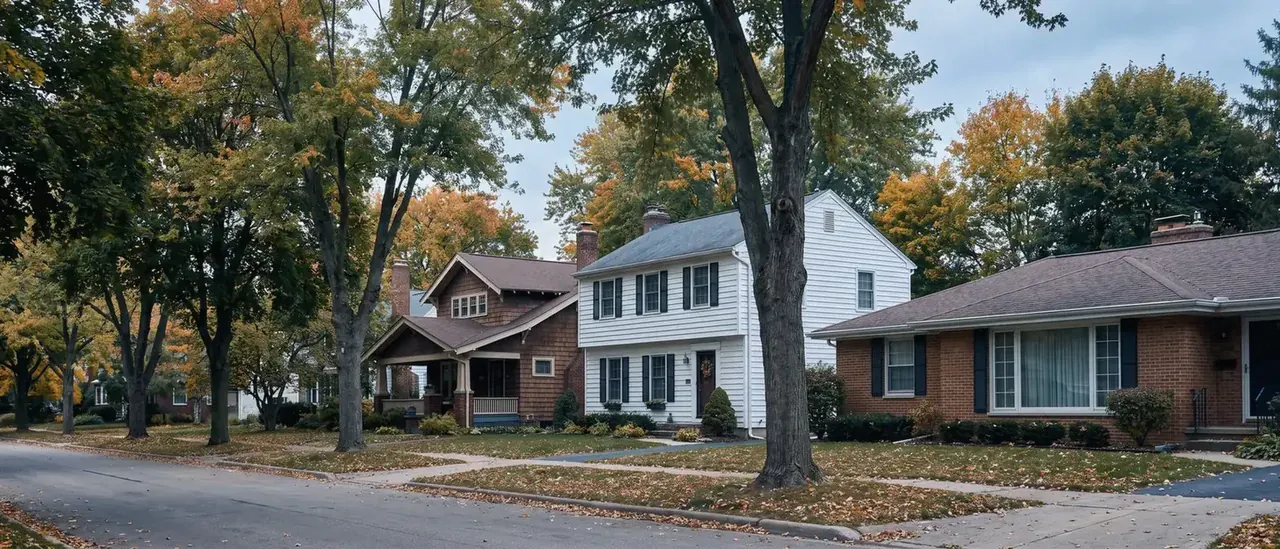
Owners with a reverse mortgage District of Columbia borrow from their home's value and skip monthly payments. The local median limit lately reached $309,132. The standard federal loan, known as a Home Equity Conversion Mortgage or HECM, is what most people use. You won't make a mortgage payment each month. Once you leave the home, the debt that has built up gets repaid. Home prices in the District are high: the 28 HECMs insured between October 2025 and August 2026 had a median value of $736,500. Those prices meant that 7 loans reached the ceiling of $1,249,125 set by the federal HECM lending limit.
How to cut your property tax in the District of Columbia by 50 percent
Living in the house as your main home, paying property taxes and homeowners insurance and maintaining it are all required by federal reverse mortgage rules. If your property taxes go unpaid, you break the loan rules. That's a default, and it can lead to foreclosure. So local tax relief becomes key.
Senior Citizen or Disabled Property Owner Tax Relief
The District Office of Tax and Revenue provides Senior Citizen or Disabled Property Owner Tax Relief. It cuts a qualified owner's taxes by 50 percent. You can apply the moment you turn 65. If you're disabled, age doesn't matter. For the 2026 tax year, your household's federal adjusted gross income from 2024 has to stay below $163,500. To calculate adjusted gross income, start with your total income on the federal tax return and subtract the basic deductions.
Senior Assessment Cap Credit
With the Senior Assessment Cap Credit, the rise in your taxable assessed value is usually capped at 2 percent each year. You don't have to file any extra paperwork. Once you're receiving both the homestead deduction and the senior or disabled relief, the cap kicks in on its own.
If you fall behind on property charges, can the District of Columbia help?
Yes, a Reverse Mortgage Foreclosure Prevention Program is created by District of Columbia Code section 42-2703.07a. Money from this program goes to qualified borrowers at risk of losing their homes. The costs it pays are your overdue property taxes, condo fees, homeowners insurance or homeowner association dues. A qualified homeowner may receive assistance of up to $40,000. For that amount, the agency puts a subordinate lien on your home. This type of lien is a legal claim paid only after your reverse mortgage lender gets paid. To qualify, you need to be at least 62 and hold a reverse mortgage in the District of Columbia. You also have to be at risk of foreclosure. Your yearly borrower income must not go above 80 percent of the Washington metro area's median income for a 4-person household.
Rules from the Department of Insurance, Securities and Banking, and filing a complaint
Financial firms are supervised by the Department of Insurance, Securities and Banking, which also provides reverse mortgage information for the District. Every reverse mortgage lender in the District of Columbia is bound by the federal rules of the Department of Housing and Urban Development. Those rules make it mandatory to complete housing counseling before you can receive a HECM loan. An independent counselor will walk you through the loan's costs and explain how the debt increases over time. There are 2 local, federally approved counseling agencies in the District, plus 14 active HECM lenders. The agency's Consumer Services Division can get involved if you run into trouble with a mortgage lender, a bank or an insurer. You can also call the agency at (202) 727-8000 with questions.